When planning a trip to Sri Lanka, seeing elephants in their natural environment or at dedicated care facilities is often high on the priority list for travelers. Among the various locations across the island, Pinnawala stands out as one of the most recognized and frequently visited spots. Located in the Kegalle district, conveniently situated on the main route between the commercial capital of Colombo and the cultural hub of Kandy, Pinnawala offers a unique opportunity to observe these massive, intelligent creatures up close.
Pinnawala is not a typical national park where you go on a jeep safari to spot wildlife in the dense jungle. Instead, it is a localized village that has grown around a central elephant care facility. This setup allows visitors to see large herds of elephants engaging in their daily routines, particularly their spectacular herd movements to the nearby river. For many visitors, seeing a group of over fifty elephants of all ages, from massive tuskers to playful infants, walking down a narrow village street is an unforgettable sight that simply cannot be replicated elsewhere.
However, visiting Pinnawala requires a bit of planning to ensure you get the most out of the experience while navigating the crowds and understanding the nuances of the location. At Emerald Sri Lanka Tours, we specialize in organizing seamless, informative, and well-timed visits to Pinnawala, ensuring our guests can simply enjoy the moment without worrying about the logistics. This guide will walk you through everything you need to know about visiting this famous destination, what to expect, and how to make the most of your time there.
Understanding the Pinnawala Elephant Orphanage
The centerpiece of the area is the Pinnawala Elephant Orphanage. Established in 1975 by the Sri Lankan Department of Wildlife Conservation, the facility was originally created to provide care and sanctuary for orphaned unweaned wild elephants found wandering in and near the forests of Sri Lanka. In its early days, the orphanage started with just a handful of resident elephants. Over the decades, it has grown significantly and now houses one of the largest captive herds of elephants in the world.
The orphanage operates on a large plot of land that includes open fields, feeding areas, and resting spots for the animals. The primary goal of the institution has evolved over the years. While it continues to take in injured or orphaned elephants, it also operates a successful captive breeding program. The daily routine at the orphanage is highly structured, revolving around feeding and bathing times. Visitors can observe the elephants being fed massive quantities of foliage, such as palm leaves and branches, which make up the bulk of their diet. The younger elephants, particularly those that are still nursing, are bottle-fed milk, a process that draws large crowds of onlookers.
It is important to understand that the orphanage is a government-run facility that balances the care of the animals with public viewing. The sheer size of the herd means that the logistics of managing them are complex. Our guides at Emerald Sri Lanka Tours are well-versed in the history and current operations of the orphanage, providing our guests with valuable context that goes beyond what you can read on an information board. We make sure you understand the background of the facility, allowing for a more meaningful visit.
The Main Event: Elephants Bathing in the Maha Oya River
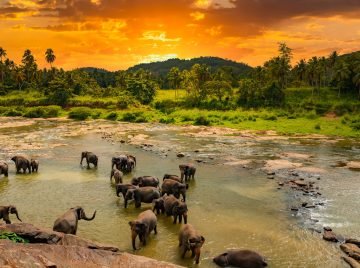
While the orphanage grounds offer a chance to see the elephants feeding, the absolute highlight of any trip to Pinnawala is the river bathing session. Twice a day, the entire herd is guided by their mahouts out of the orphanage gates, across the main road, and down a narrow street lined with cafes and souvenir shops to the broad, rocky banks of the Maha Oya River.
This procession is quite a spectacle. Traffic is temporarily halted as the massive animals casually stroll down the street. Once they reach the river, the scene transforms into a joyous display of splashing, rolling, and playing. Elephants love water, and seeing them interact in the river is a delight. The younger calves often playfully dunk each other, while the older adults lay on their sides in the shallow water, allowing the mahouts to scrub their thick skin with coconut husks.
The riverbed is wide, and the opposite bank is lush and green, providing a beautiful backdrop for photography. Visitors line the terraces of the restaurants and viewing platforms overlooking the river. This is the perfect time to grab a cold drink, find a comfortable seat, and watch the herd socialize. The bathing sessions usually last for about two hours, giving you plenty of time to take in the sights. The timing of this activity is crucial, and it is the focal point around which we structure our visits. When you travel with Emerald Sri Lanka Tours, our drivers and guides time your arrival perfectly. We know the best vantage points along the river and will ensure you have a prime spot to view the herd without feeling rushed or crowded.
Navigating Ethical Tourism at Pinnawala
In recent years, the conversation around animal tourism has rightly shifted towards ethical practices and animal welfare. When visiting places where captive animals are kept, it is natural for modern travelers to have questions and concerns. Pinnawala is a complex destination in this regard, and it is important to approach a visit with an informed perspective.
Because the orphanage houses such a large number of elephants, some degree of control is necessary for the safety of both the animals and the public. You will notice that the mahouts carry traditional hooks, and some of the more unpredictable males may be chained during certain times. These practices can be confronting for visitors who are expecting a completely wild environment. The orphanage was set up in an era before modern sanctuary concepts were fully developed, and it operates more as a captive management facility than a wild reserve.
At Emerald Sri Lanka Tours, we believe in transparent, responsible travel. We encourage our guests to observe the elephants from a respectful distance and focus on the natural behaviors exhibited during the river bathing sessions. We do not support or arrange activities that involve riding elephants, as this practice is widely recognized as detrimental to their well-being. Instead, we advocate for observational tourism. Watching the herd interact socially, seeing a mother care for her calf, or simply observing them cooling off in the river offers a far more authentic and rewarding experience. By discussing these ethical considerations with our clients beforehand, we ensure that expectations are set correctly and that the visit aligns with responsible travel principles.
Things to Do and See Near Pinnawala
A visit to Pinnawala usually takes a half-day, leaving plenty of time to explore the surrounding area. Since the town is located in the transitional zone between the lowlands and the hill country, the landscape is lush, tropical, and dotted with interesting stops. Making a full day out of the region adds great value to your itinerary.
One popular addition is a visit to a local spice garden. Sri Lanka has a rich history as a crucial stop on the ancient spice routes, and the Kegalle district has excellent conditions for growing a variety of spices, including cinnamon, cardamom, nutmeg, and pepper. A walk through a spice garden provides a sensory education on how these plants grow and are processed. You can learn about their uses in traditional Ayurvedic medicine and local cuisine.
Another excellent stop is a traditional craft village or a local tea factory. While the high-altitude tea of Nuwara Eliya is more famous, the mid-country tea estates near Pinnawala produce robust, flavorful teas that are worth sampling. Furthermore, the route toward Kandy from Pinnawala is scenic, winding through hills and valleys, offering plenty of opportunities for landscape photography.
When building your itinerary, Emerald Sri Lanka Tours can suggest the best nearby attractions based on your specific interests. Whether you are a foodie wanting to learn more about Sri Lankan spices, or you want to stretch your legs with a short hike to a local temple, we customize the day to ensure it perfectly complements your time spent with the elephants.
Practical Tips for Your Visit
To make the most of your time at Pinnawala, a few practical considerations go a long way. The weather in this region is typically warm and humid year-round, so dressing in lightweight, breathable clothing is highly recommended. Comfortable walking shoes are a must, as you will be walking from the orphanage grounds down to the river along slightly uneven paths. A hat, sunglasses, and sunscreen are essential, especially during the mid-day river bathing sessions when the sun can be quite intense.
Photography enthusiasts should bring a zoom lens to capture close-up shots of the elephants in the river without needing to get too close. However, standard smartphone cameras are more than adequate for capturing the sheer scale of the herd. It is also wise to carry a small bottle of water to stay hydrated, though there are plenty of cafes and vendors along the main street.
Timing is everything. The elephants walk to the river twice a day, typically in the mid-morning and early afternoon. Missing these walks means missing the most dynamic part of the experience. The crowds can swell significantly just before the elephants move, making navigation difficult.
Planning Your Trip with Emerald Sri Lanka Tours
Coordinating the timing of the river walk, managing travel times on Sri Lankan roads, and navigating the ticketing process can be stressful if you are managing it independently. This is exactly where Emerald Sri Lanka Tours excels. We take the guesswork out of the equation.
Our experienced drivers know the traffic patterns on the Colombo-Kandy road intimately and will plan your departure time perfectly to align with the elephants’ daily routine. We handle all the ticketing and entry logistics in advance, meaning you will not have to stand in long queues under the sun. Once inside, our guides provide insightful commentary, helping you understand what you are seeing and answering any questions you have about the elephants and the facility.
Moreover, we integrate the Pinnawala visit seamlessly into your broader Sri Lankan itinerary. Whether it is your first stop after landing at the airport, or a relaxing break on your journey back from the hill country, we ensure the pacing is comfortable and sensible. We can arrange for you to enjoy a traditional Sri Lankan lunch at a carefully selected restaurant overlooking the river, allowing you to dine while the elephants bathe just a few meters away.
Traveling with Emerald Sri Lanka Tours means you have a dedicated local expert by your side. We pride ourselves on offering a personalized service that elevates a standard sightseeing stop into a rich, educational, and highly enjoyable experience. Let us handle the details, the timing, and the logistics, so you can focus entirely on the incredible sight of Sri Lanka’s elephants enjoying the cool waters of the Maha Oya River.